
Daft Punk - Random Access Memories -2013- By Oiramn.rar [ INSTANT • 2027 ]
That is Random Access Memories in a nutshell.
Most fans skip it. They say it’s too weird. But "Touch" is the thesis. It’s what happens when a robot finds an old, half-destroyed MP3 of a human memory. The data is fragmented. The emotion is there, but the codec is wrong. That frantic middle section? That’s WinRAR throwing a CRC error—and then deciding to play the corrupt data anyway because it sounds beautiful. We played "Get Lucky" at weddings. We heard it in supermarkets. We sanitized it.
But listen to the stems. Nile Rodgers’s guitar is a loop that predates civilization. Pharrell’s falsetto is a sample of a sample of a soul record. And those vocodered "We’re up all night to get lucky" lyrics? That’s not hedonism. That’s a robot’s boot-loop.
The robots aren't singing about a party. They're singing about defragmenting their hard drive . "Get Lucky" is the sound of a machine dreaming it has a spine. The .rar file of RAM contains that track as a decoy—so humans would open the archive, get distracted by the shiny disco ball, and never notice the existential horror lurking in the bonus tracks. The album ends with "Contact." It doesn't fade out. It launches . A drum break from the 70s, a theremin squeal, and then... static. Radio interference from outer space. Daft Punk - Random Access Memories -2013- by Oiramn.rar
#DaftPunk #RAM10 #DiscoAnalysis #VinylVsDigital We live in an age of disposable streams. You tap a screen, a lossy ghost of a song plays through cheap plastic speakers, and you forget it ten seconds later. So when I unzipped a dusty folder labeled Oiramn.rar from an old external hard drive last week, I found something I wasn't looking for: a 2013 FLAC rip of Random Access Memories .
That’s not a song. That’s the sound of the .rar finishing extraction. The album isn't a conclusion; it's a bootloader. For eight minutes, Daft Punk pretend they are a band. Then, in the final second, they remind you: We are data. You are listening to a simulation. Goodbye.
Because the robots went home. But the files remain. ★★★★★ (5/5 Corrupted Sectors) That is Random Access Memories in a nutshell
April 17, 2026
In 2013, the robots fooled us. We thought Random Access Memories was a eulogy for the analog era—a $1 million, studio-session-heavy homage to the soft-flesh musicians of the 70s (Nile Rodgers, Giorgio Moroder, Paul Williams). We praised it as a "return to human touch."
And then they broke up. The archive became read-only. When I finally unzipped that old folder, I didn't just hear 2013. I heard a prophecy. Random Access Memories was never a nostalgia trip. It was a warning from two robots wearing helmets: "One day, all your memories will be random access. You will scroll past your mother’s face. You will shuffle your first kiss. You will loop your own eulogy." But "Touch" is the thesis
Decoding the .rar : Why Daft Punk’s Random Access Memories (2013) Feels Like a Lost File We’re Still Trying to Open
But listening to it now, inside this compressed .rar file, I realize we had it backwards. RAM isn’t about humans. It’s about the ghost in the machine . Think about the extension: .rar . It’s a Rosetta Stone of compression. You take a massive, sprawling thing—a 74-minute opus recorded on analog tape with 100+ tracks—and you crush it into a single, portable icon. You lock it away. You password-protect it.
Thirteen years later. It still doesn’t fit.


Hola, muy buen post. Me sirvió mucho. Eso si, creo que hayun pequeño error de tipeo:
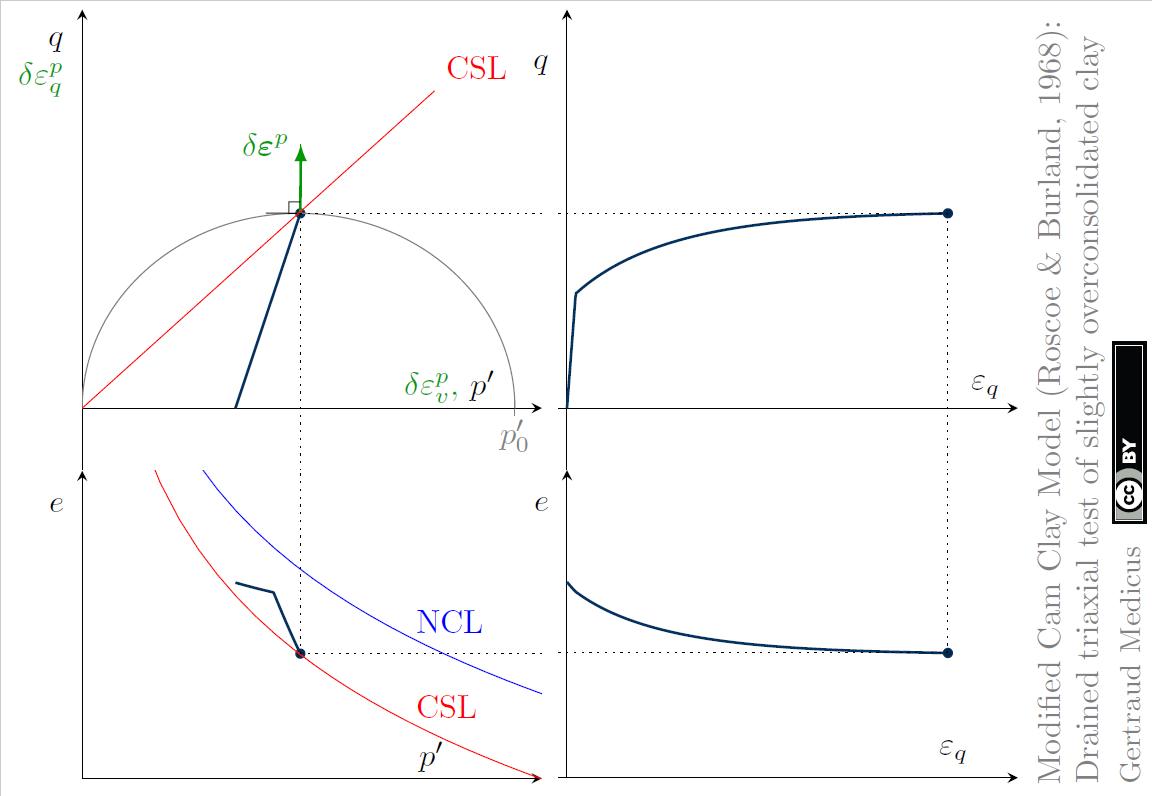
“Contractivos (Δu>1): Tienden a consolidar. Se da en suelos sueltos y arcillas normalmente consolidadas (NC).
Dilatante (Δu0y Δu<0 cierto??
Gracias
Hola, Esteban
Me alegro que te haya servido. En este caso no hay un error, en los suelos contractivos, cuando se ejerce la carga aumentan las presiones de poro. Al revés con los dilatantes.
Saludos.
Creo que se refiere a que en la imagen el valor critico para la dilatancia o contraccion es el 0 y luego en el texto es 1.
Eso si, muy buen post, simple dentro de lo complejo.
Hola, Benjamin.
Es cierto que se contradice. Lo reviso, gracias!
Buenos días,
Como se determinan las presiones de cámara en un ensayo triaxial CD, cuando de van a ensayar las 3 probetas? Cual es proporción de incremento adecuada entre cada una de esas presiones? Gracias
Hola, pues eso depende de tu proyecto.
Hay que preguntarse en qué condiciones estará sometido el suelo durante la construcción y la puesta en servicio.
Normalmente la primera es la actualmente tiene in situ, en función de su profundidad. La tercera sería las condiciones de servicio, por ejemplo, cuando construyamos la presa o el terraplen, o entre en carga la cimentación. La segunda, pues uno intermedio.
Saludos.
Ignacio
Gracias amigo. Solo me ha quedado una duda con el ensayo UU. En el blog mencionas que debe saturarse primero. Me parece que esa no es una condición estrictamente valida, ya que se entiende que el ensayo rápido no da tiempo para que el material sature, como ejemplo puede ser el realizar el ensayo UU y representar que sucederia si estas construyendo un dique y necesitas saber las condiciones de estabilidad. Sin embargo, el saturar la muestra, y luego ensayarla te podria dar valores menores de parámetros de resistencia cortante y utilizar ello para tu análisis y ser conservador. Yo considero que antes de realizar un ensayo es importante comprender como se va comportar el suelo y en función a ello desarrollar el análisis. Muchas gracias por tu blog, me he tomado el tiempo de leer, me quedan algunos pasos por profundizar pero muy bueno.
Martin, es necesario saturar el material de lo contrario va a haber efectos de succión que no pueden ser medidos y no es posible generar el analisis de esfuerzos efectivos que se necesita para determinar los valores de resistencia.
Hola Nacho, para mi este ensayo es muy importante y hay cosas que se hacen por costumbre pero que se pueden cambiar a mejor. Me explico, la presión de poro, por ejemplo, siempre se puede medir en la célula triaxial tanto si se hace un ensayo UU, como uno CD, el asunto radica en configurar el equipo y los sensores convenientemente.
Para mí, si cuando se hace un triaxial se le diera al cliente los datos de los sensores además de las curvas de rotura, el cliente podría comprobar si el ensayo realmente es UU o CD ya que muchas veces la elección de velocidades de rotura no son correctas, la nuestra drena mal por lo que sea, etc.
En resumen, este ensayo tan importante debe realizarse por técnicos especializados tanto en laboratorio, como en cálculo de resultados.
La formación es muy importante!!!