












The city of New Mombasa is drenched in perpetual night and a soft, persistent rain. The neon signs flicker. The streets are littered with burned-out husks of human vehicles. The only companion is the city’s AI, the Superintendent, which communicates through flashing traffic signs ("REGROUP," "REFUGE," "HELP").
This "hub-and-spoke" design was revolutionary for the franchise. It turned the action into a mystery. Why is the city empty? Where is Virgil? And what is the Superintendent? If Master Chief’s games are blockbuster rock operas, ODST is a lonely saxophone solo at 3 AM.
It is a game about loneliness, resilience, and the ordinary heroes who do the impossible without a shield. It is the Rogue One of Halo —a dark, beautiful, and necessary detour. If you only ever play the Master Chief Saga, you’re missing the soul of the war.
In the hub world—a semi-open, nocturnal New Mombasa—you play as "The Rookie." You are a lone investigator. Armed with a pistol, a VISR (Visual Intelligence System, Reconnaissance) visor, and a map, you follow clues. You find a broken helmet, a sniper’s nest, a bullet-riddled wall. Each clue triggers a flashback to one of your squad mates. Halo 3- ODST
It’s not the biggest Halo game. It’s the best one.
Two years later, Bungie released Halo 3: ODST . It wasn’t Halo 4 . It wasn’t even a direct sequel. It was a side-story—a moody, jazz-infused detective thriller that traded the Master Chief’s power armor for a rookie’s smokes and a shattered city. What resulted is arguably the most atmospheric and emotionally resonant game in the entire series. Originally conceived as a simple expansion pack for Halo 3 , ODST grew into a full standalone title. The premise is deceptively simple: Set during the events of Halo 2 (specifically the Covenant’s assault on Earth), you are not a genetically augmented super-soldier. You are an Orbital Drop Shock Trooper—a "Helljumper"—and you are fragile.
Today, Halo 3: ODST is revered as a masterpiece of tone and storytelling. It proved that the Halo universe didn't need galaxy-ending threats to be interesting. Sometimes, the most compelling story is that of the ordinary soldier trying to find their friends in a dead city. The city of New Mombasa is drenched in
After a disastrous drop pod insertion over the African city of New Mombasa, your squad is scattered. You wake up hours later, alone in the rain-soaked streets, with no contact and a city gone eerily quiet. The Covenant have glassed the city center, but something worse remains. The genius of ODST lies in its structure. The game is split into two distinct modes of play, and the player controls two different characters.
"Feet first into hell."
In the sprawling pantheon of first-person shooters, 2007’s Halo 3 felt like a definitive ending. It was a bombastic, universe-saving finale where Master Chief piloted a bomb through a slipspace rupture and fired a ringworld to stop the Flood. It was epic, explosive, and utterly heroic. The only companion is the city’s AI, the
But the true star is the soundtrack by Martin O’Donnell and Michael Salvatori. While the main Halo theme is a legendary choral chant, ODST ’s theme is a melancholy jazz-fusion piece. The lone piano and weeping alto saxophone evoke film noir classics like Chinatown or Blade Runner . When you’re walking through an abandoned highway underpass, the music doesn’t hype you up—it makes you feel the weight of loss. Because you aren't a lone wolf (or a silent one-liner machine), ODST has the best ensemble cast in Halo history. The squad is led by Sergeant Edward Buck, voiced with perfect roguish charm by Nathan Fillion. He’s the leader who cracks jokes to hide his fear. He is flanked by the stoic Dutch (Adam Baldwin), the sniper Romeo (Nolan North), and the demolitions expert Mickey (Alan Tudyk).
Here, you play as a different ODST (Dutch, Mickey, Romeo, Buck, or Dare) during the height of the battle. These linear, action-heavy missions are classic Halo —you fight Choppers, Wraiths, and Hunters alongside Marines. But now, the combat is terrifying. You have no energy shield. A few plasma bolts will kill you. You must use cover, hit-and-run tactics, and the iconic silenced SMG to survive.
Cargando...

Emma Tammi | 104 min | Thriller,Terror | 2025
Josh Hutcherson, Elizabeth Lail, Matthew Lillard, Piper Rubio
Rich Moore,Byron Howard | 107 min | Animación,Aventura | 2025

Richard Donner | 111 min | Aventuras | 1985 (Estados Unidos)
Sean Astin, Corey Feldman, Josh Brolin, Martha Plimpton, Joe Pantoliano, Kerri Green, ...

Jon M. Chu | 130 min | Músical,Fantasia | 2025
Jeff Goldblum, Cynthia Erivo, Jonathan Bailey
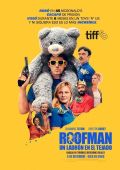
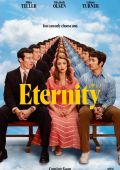

Ruben Fleischer | 112 min | Thriller,Crimen | 2025
Woody Harrelson, Mark Ruffalo, Morgan Freeman, Justice Smith, Isla Fisher, Jesse Eisenberg, ...

Chus Gutiérrez | 98 min | Comedia,Comedia Romántica | 2025
Óscar Casas, Juan Amodeo, Xurxo Carreño


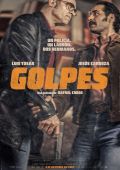
Rafael Cobos | 101 min | Drama,Crimen | 2025
Carlos Bernardino, Cristalino, Jesús Carroza, Cristina Alcázar, Lorena Ávila, Domingo Beltrán
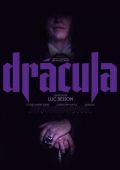

Javier Veiga | 100 min | Comedia | 2025
Dani Rovira, Guillermo Francella, Antonia San Juan, Marta Hazas, Javier Veiga, Denisse Peña

Martín Cuervo | 94 min | Comedia | 2025
Jaime Lorente, Mariam Hernández, Salva Reina, Adriana Torrebejano
Taquilla Cine es un buscador de películas y cine. Nosotros no vendemos directamente las entradas, trabajamos agregando la información que ya existe en distintos portales de Internet y redirigiendo a nuestros visitantes a páginas de venta oficiales. DesdeTaquilla.com no podemos controlar, ni hacernos responsables de las modificaciones que puedan realizar los cines.
Asimismo, nuestro equipo no tiene acceso a la información de ninguna reserva, ya que todas las compras se realizan en páginas de terceros. Por lo tanto, tendrás que dirigirte directamente al canal de venta donde realizaste la compra para solicitar el reenvío de tus entradas, o transmitir cualquier tipo de incidencia asociada a tu reserva.