Gameplay
“Your father’s old kurta is in the cupboard,” Amma said softly. “And my wedding saree. The red one. It brings luck.”
Meera looked down. The charcoal blazer felt like armor. “Five minutes, Ma. The Americans are reviewing the merger.”
The family moved as a single organism: Radha holding the thali , Meera carrying the coconut, Amma chanting the mantras . They descended the stone steps to the river. The Ganga was a black mirror reflecting the chaos of fireworks above. Meera placed the diya on a leaf and pushed it onto the water. The tiny flame wobbled, then steadied, joining a constellation of a thousand other hopes floating downstream.
Radha didn’t understand mergers. She understood rasam —the flow of life. She understood that if the first diya wasn’t lit before the muhurat ended, the family’s entire year would tilt off its axis. With a sigh that carried the weight of a thousand ancestral rituals, Radha left, the scent of ghee and camphor trailing behind her like a ghost. jardesign a330 crack
Radha didn't turn from the stove. “That’s nice, beta. But the kheer is burning. Hold the ladle. Stir slowly. Don’t let the milk stick to the bottom.”
Meera took the wooden ladle. Her mother’s hand, warm and firm, covered hers for just a moment. They stirred together in the flickering light.
In the sudden, heavy silence, she heard it: the deep, resonant clang of the temple bell from the courtyard below. Her grandmother, Amma, was beginning the aarti without her. “Your father’s old kurta is in the cupboard,”
She muted herself just as her mother, Radha, burst into the room, her silver anklets chiming a frantic rhythm. “Beta! The puja thali is ready! The priest is waiting. Why are you still in that black suit?”
Outside, a firework exploded into a golden flower. Inside, the milk thickened, the sugar dissolved, and the rice became soft. For the first time in ten years, Meera didn’t check her email. She just stirred.
She changed. The raw silk scratched her skin in a way that felt like waking up. As she draped the six yards, a muscle memory older than her MBA kicked in. Her fingers found the pleats, the pallu, the pin at the shoulder. By the time she lit her first diya , the corporate woman was gone. In her place was a daughter of Banaras. It brings luck
They happen on river steps, in kitchen smoke, and in the quiet, stubborn act of showing up for the life that is actually in front of you.
And in that simple, sacred act—the meeting of a corporate merger and a pot of kheer —she understood her culture not as a burden, but as a ballast. It wasn’t about choosing between New York and Varanasi. It was about carrying the red saree in her briefcase, the taste of cardamom on her tongue, and the knowledge that the most important meetings don’t happen on Zoom.
“Meera, your mic is on,” a clipped American voice said. “We can hear… screaming?”
The tiny flicker of a diya reflected in Meera’s phone screen, two worlds colliding in a single flame. Outside her window, the narrow lanes of Varanasi were being swallowed by the smoke of a thousand firecrackers. Inside, the glow of a Zoom call illuminated her face. She was presenting quarterly projections to a New York boardroom.
For ten more minutes, Meera discussed EBITDA and synergy. Then, a power cut. The classic Indian summer curse, even in autumn. The fan died, the router blinked red, and her connection to the West vanished. The boardroom dissolved into pixels.
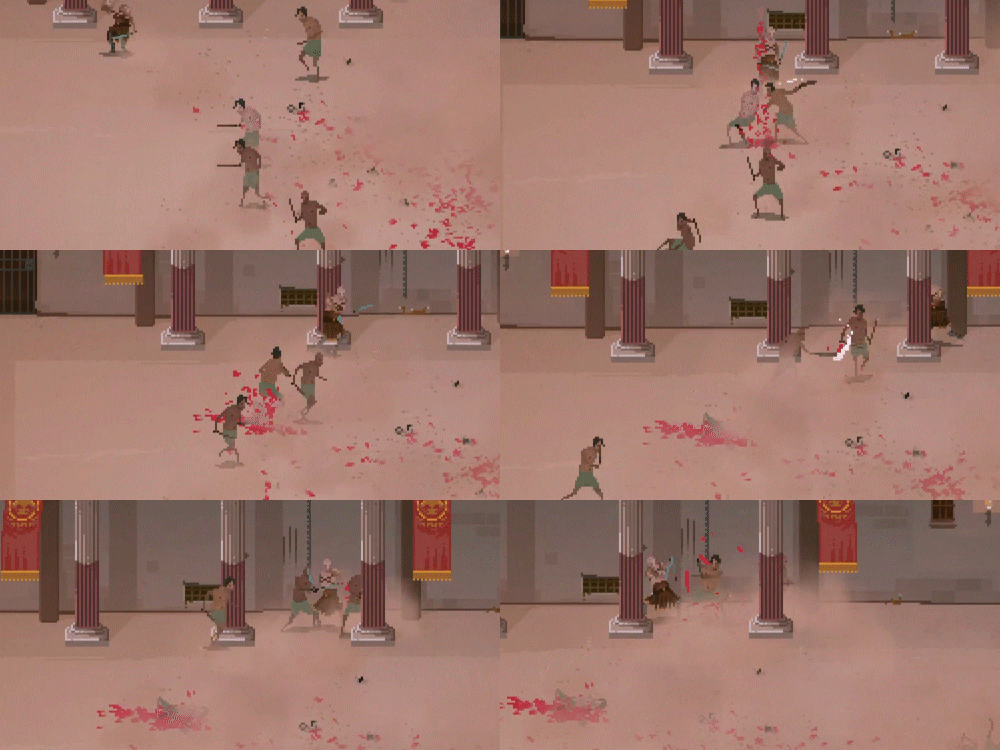
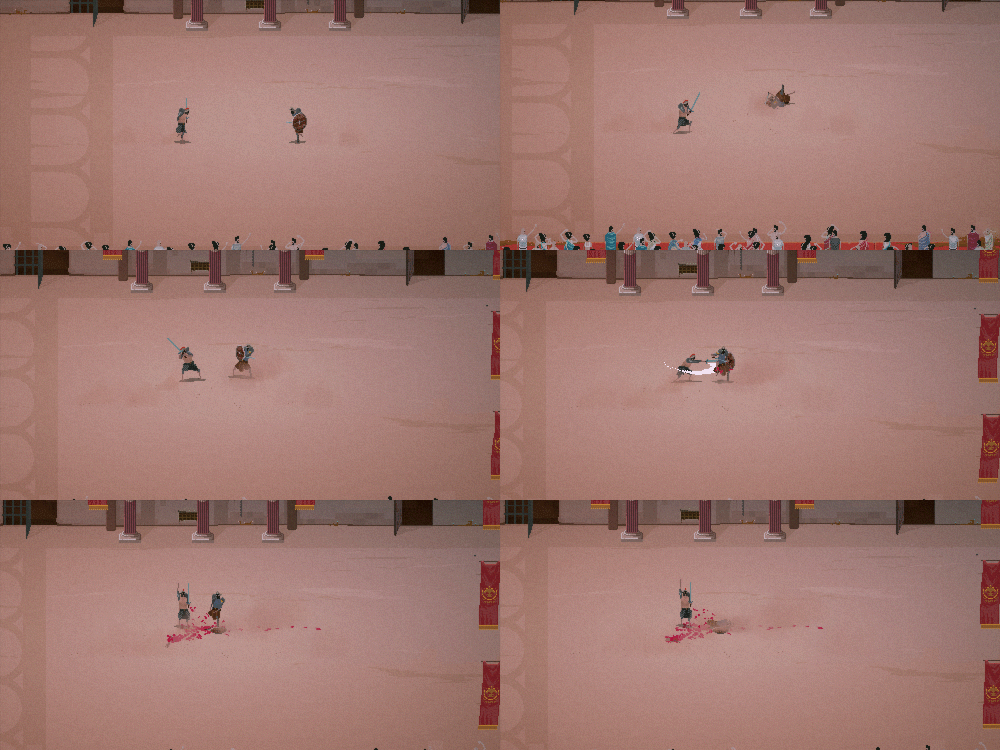
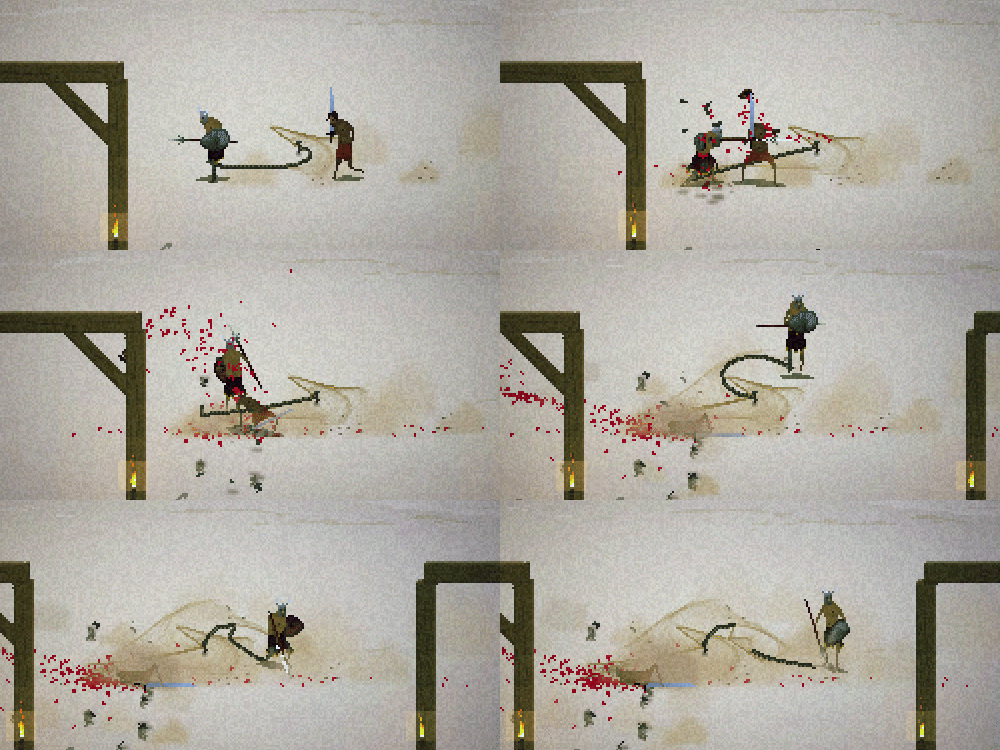
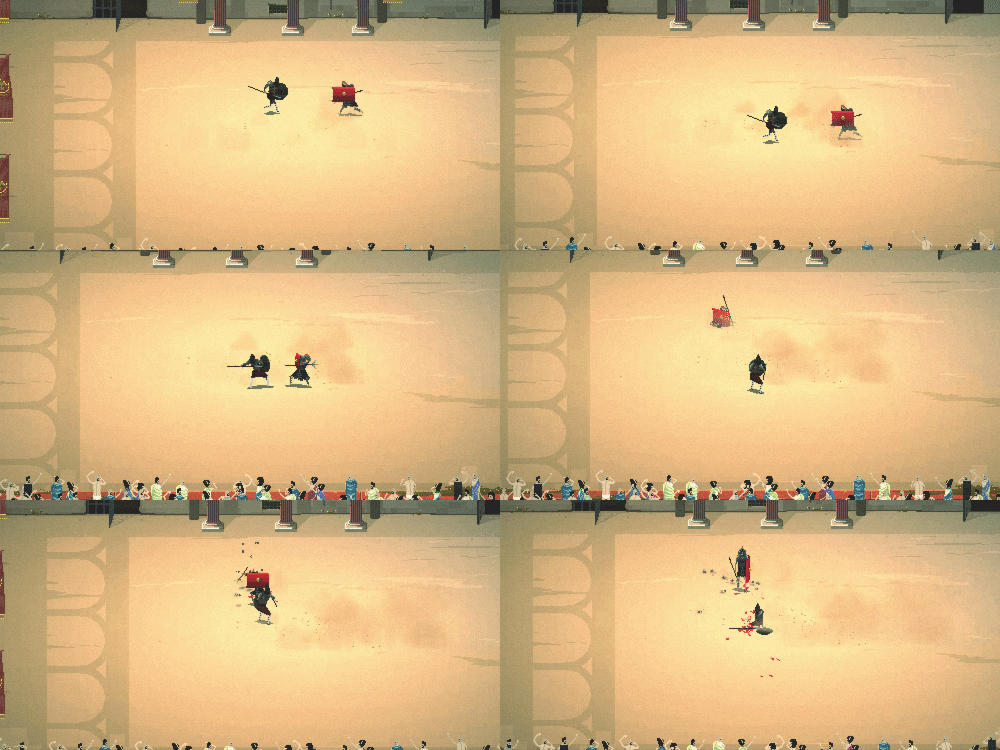
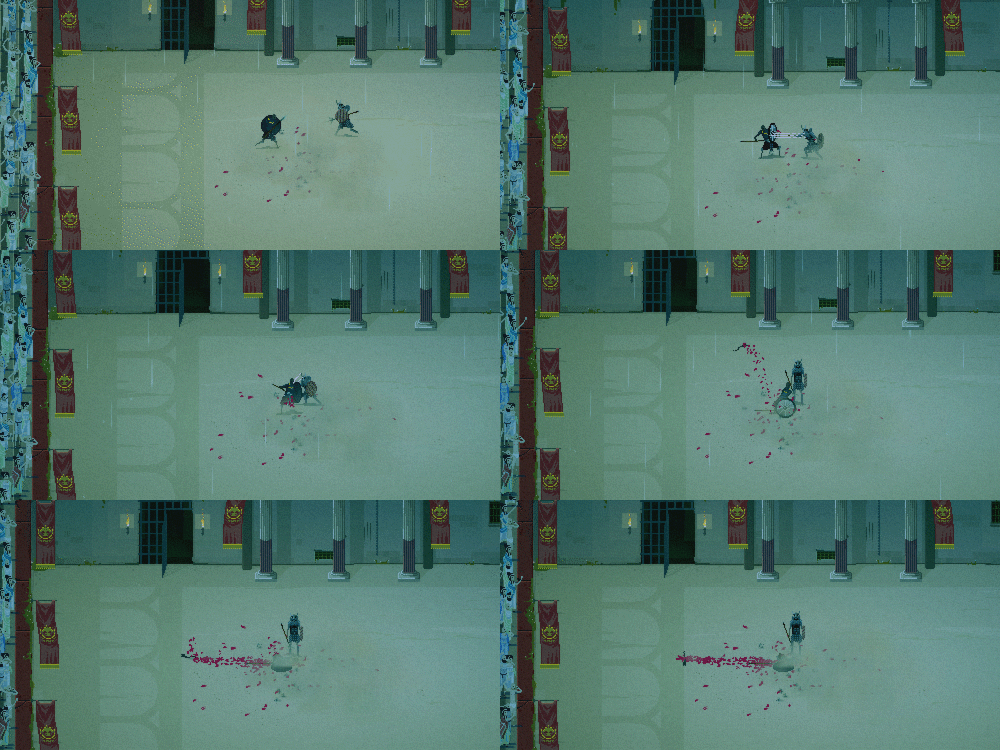
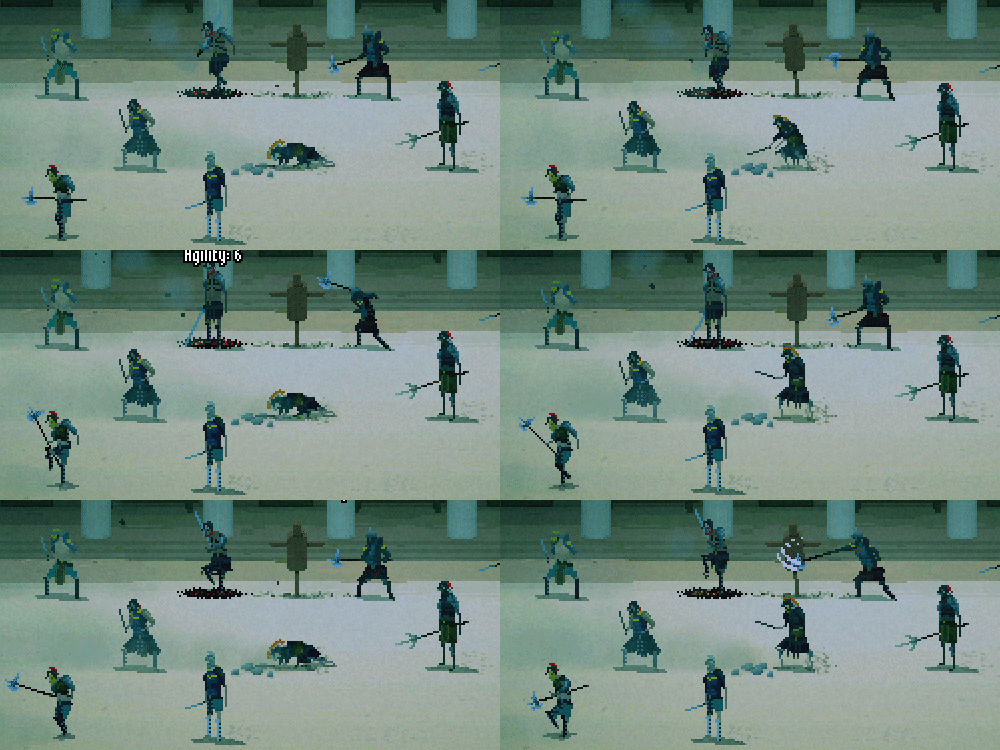
Drive a group of angry brutes to glorious victory and elevate your father's ludus from the muck and mire of shameful defeat, restoring it to honour via ruthless bloody victory over your opponents.
May Jupiter himself hear of your exploits.
