~ Felghana Archives ~
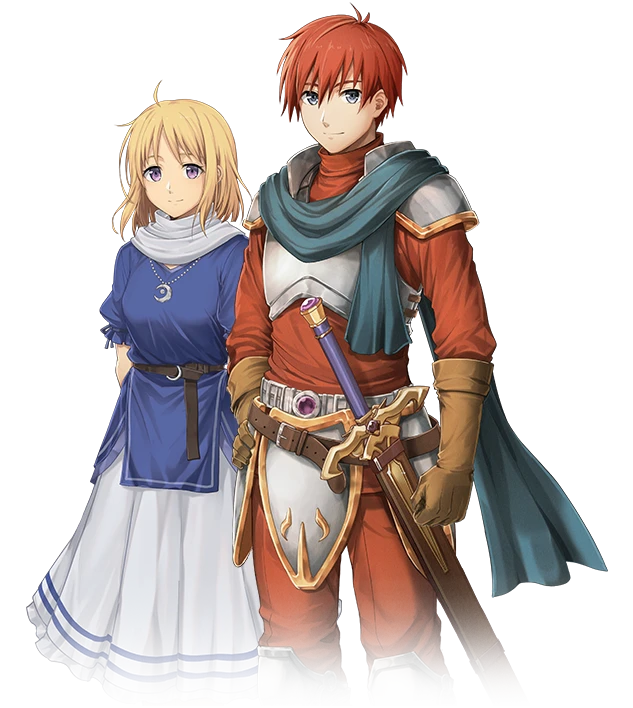
After regaining my memories in the land of Celceta, I feel rather at home with my newfound title of 'Adventurer.' Now that I've reunited with my old friend Dogi, it's been suggested that we venture to his homeland of Felghana, where he'd studied combat techniques in his youth under a master named Berhardt. As we headed northeast across Europe on the long road to this somewhat isolated, volcanic land, we stumbled upon a troupe of performers and decided to have our fortunes told. Little did we know how accurate the reading would be...
La Foret De La Peau Bleue Link
The true shock came from genetic analysis. The dominant organism—provisionally named Cyanoderma sylvae —contains both plant chloroplasts and animal-like integumentary genes. It photosynthesizes, but it also possesses a decentralized network of nociceptors (pain receptors) and what Tanaka cautiously calls “a primitive form of tactile memory.”
Victims describe a progressive loss of pain sensation in the blue patches, followed by an uncanny ability to sense barometric pressure changes. Two advanced cases have reportedly developed small, chlorophyll-rich cells beneath their fingernails, allowing them to survive on sunlight and water for up to three days. La foret de la peau bleue
Dr. Kenji Tanaka, a xenodermologist at the University of Tokyo, was part of the only peer-reviewed expedition granted access in 2015. “We spent three days just watching the membrane breathe,” he told me via video call from his lab, where a refrigerated sample is kept under triple lock. “Because that’s the correct word. It breathes . The porosity changes with humidity. The color shifts from indigo to cobalt to something almost violet when the temperature drops below 20°C. And when we pricked it with a sterile needle, it… reacted. Not like a plant. Like a flank.” The true shock came from genetic analysis
In layman’s terms: the forest colonizes the human body. “We spent three days just watching the membrane
It took another decade for a Franco-Brazilian LIDAR survey to finally reveal what Fournier had suspected: a perfectly circular, 47-square-kilometer patch of forest with a spectral signature unlike any known chlorophyll-based life form. The blue was not a trick of light. It was the surface itself. What makes La Forêt de la Peau Bleue biologically unprecedented is not merely its color, but its tactile nature. Every tree, vine, and epiphyte within the perimeter is covered not with bark, but with a continuous, supple membrane that bleeds when cut. Early expeditions returned with samples that defied classification: the material has the tensile strength of reptile leather, the self-healing properties of human skin, and a pigment that no spectrometer can fully decode.
On my own brief, permitted visit to the forest’s outer buffer zone (access beyond 200 meters requires a UN biodiversity waiver), I felt it before I heard it: a vibration in my molars, a strange pressure behind my eyes. My guide, a Wayambi elder named Tupã, placed a hand on my shoulder. “The forest is feeling you,” he said. “Do not feel it back.”