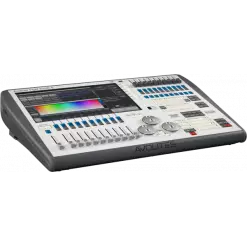
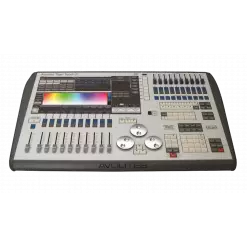
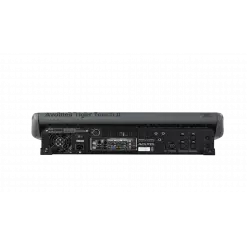
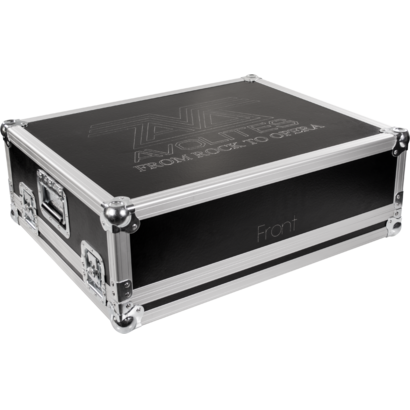
Now boasting a 100% brighter screen, increased processing power, and faster graphics engine, the Tiger Touch II is the most specified Titan console.
The Avolites Tiger Touch II represents the perfect combination of power and portability. This third-generation console is packed with enough power for complex shows, yet small and light enough to fly in standard hold luggage. The console features SMPTE timecode support and a redesigned button layout to match the entire Titan range.
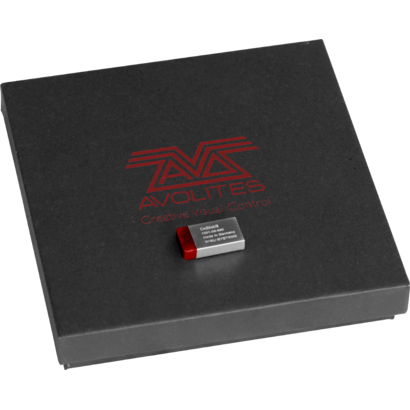
In order to update the console to version 12 of the Titan, it will be necessary to purchase and install a USB dongle called AVOKEY.
Serial 02006 - 03065
You need to order:
- AVOKEYINT
- 1x5 way to USB-A Cable (spare part code 8000-6102)
Once you've received your AVOKEYINT and 1x5 way to USB-A Cable, you will be required to connect the USB-A Cable to the motherboard. This cable will provide an additional USB port for the AvoKey.
Click here to view the installation guide: https://www.avolites.com/Portals/0/Downloads/Manuals/AvoKey/8000-6102 TT2-2-3K AVOKEY upgrade with 1808-0028.pdf
Serial 03066 - 4020
You need to order only AVOKEYINT
Once you've received your AVOKEYINT, you will be required to connect this directly to the available (Blue) USB port inside the console (on the motherboard).
Click here to view the installation guide: https://www.avolites.com/Portals/0/Downloads/Manuals/AvoKey/8000-6101 TT2 AVOKEY no cable.pdf
Serial 04021 - 05001
You need to order only AVOKEYINT
Once you've received your AVOKEYINT, you will be required to connect this directly to the available (Red) USB port inside the console (on the motherboard).
Serial 5001 and above include a factory fitted AvoKey.
Therefore, you do not need to purchase an AvoKey. whmcs advanced menu manager
In the ecosystem of web hosting and digital commerce, WHMCS (WebHost Manager Complete Solution) stands as the central nervous system for thousands of businesses. It manages billing, automates provisioning, and handles support. However, one of its most user-facing components—the navigation menu—is often the most neglected. Out of the box, WHMCS provides a static, albeit functional, menu structure. For a growing hosting provider or a digital agency, this default navigation is a bottleneck. Enter the WHMCS Advanced Menu Manager : a tool that transforms a rigid navigation bar into a dynamic, conversion-oriented, and user-experience-driven asset. The Limitations of the Native System To appreciate an advanced menu manager, one must first understand the friction of the native WHMCS environment. By default, WHMCS relies on hook-based PHP arrays to modify the primary navigation ( PrimaryNav ) and the client area sidebar. This approach, while flexible for developers, is a nightmare for non-technical administrators.
Instead of hardcoding menu items, the module reads a JSON structure from a database table. This JSON defines the hierarchy, permissions, icons, and URLs. When WHMCS builds the page, the module iterates through this JSON, applies permission logic (checking $_SESSION['uid'] and client group IDs), and dynamically builds the ChildNav objects.
By abstracting complex PHP hooks into a visual, conditional, and cache-efficient interface, an advanced menu manager democratizes site navigation. It allows a hosting provider to iterate on their user flow weekly, personalize experiences based on client groups, and reduce friction from the very first click. For any WHMCS-powered business serious about growth and usability, adopting or building an advanced menu manager is not an option—it is a necessity. It turns the menu from a static list of links into a dynamic, responsive guide through your entire service ecosystem.
In the ecosystem of web hosting and digital commerce, WHMCS (WebHost Manager Complete Solution) stands as the central nervous system for thousands of businesses. It manages billing, automates provisioning, and handles support. However, one of its most user-facing components—the navigation menu—is often the most neglected. Out of the box, WHMCS provides a static, albeit functional, menu structure. For a growing hosting provider or a digital agency, this default navigation is a bottleneck. Enter the WHMCS Advanced Menu Manager : a tool that transforms a rigid navigation bar into a dynamic, conversion-oriented, and user-experience-driven asset. The Limitations of the Native System To appreciate an advanced menu manager, one must first understand the friction of the native WHMCS environment. By default, WHMCS relies on hook-based PHP arrays to modify the primary navigation ( PrimaryNav ) and the client area sidebar. This approach, while flexible for developers, is a nightmare for non-technical administrators.
Instead of hardcoding menu items, the module reads a JSON structure from a database table. This JSON defines the hierarchy, permissions, icons, and URLs. When WHMCS builds the page, the module iterates through this JSON, applies permission logic (checking $_SESSION['uid'] and client group IDs), and dynamically builds the ChildNav objects.
By abstracting complex PHP hooks into a visual, conditional, and cache-efficient interface, an advanced menu manager democratizes site navigation. It allows a hosting provider to iterate on their user flow weekly, personalize experiences based on client groups, and reduce friction from the very first click. For any WHMCS-powered business serious about growth and usability, adopting or building an advanced menu manager is not an option—it is a necessity. It turns the menu from a static list of links into a dynamic, responsive guide through your entire service ecosystem.